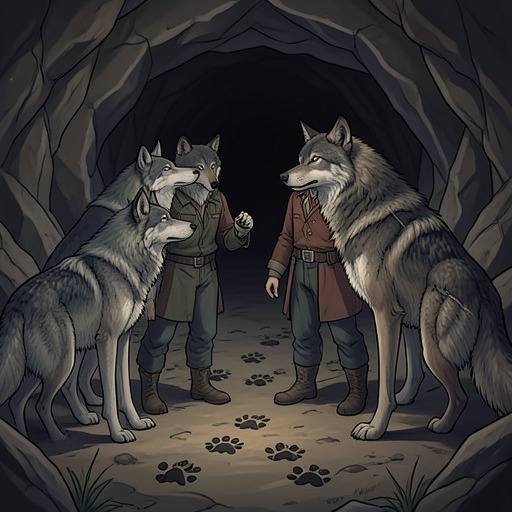
Pack Alpha
How to Flirt with A Naked WerewolfPack Alpha is the leadership role at the head of a werewolf pack, linking individual ability to the safety and organization of a wider community. Cooper Graham is regarded as the natural leader of his generation, but his departure from the packlands does not erase his status; instead, it leaves a gap that Eli helps fill and turns leadership into a point of conflict.
Role and Recognition
Evie DuChamp describes a generational structure in which every generation produces a pack and every pack has a leader. Cooper was among the first children of his generation to become a wolf. When he first phased, his speed and strength made him stand out, and the pack considered him destined to become its alpha. The role is presented as a recognized position within the community, not simply a label for any powerful wolf.
Cooper’s expected leadership is tied to the unusual fact that everyone in his line can change. By contrast, Evie’s family branch is a dead line: its members cannot become wolves. Werewolves are not confined to one family or one place; Cooper describes packs around the world and says the community he belongs to is relatively small compared with some rural Southern clans. Intermarriage outside the pack has produced more dead lines over time, a change his grandfather considers beneficial rather than a reason to preserve an unmixed lineage.
Territory, Community, and Limits
Leadership exists within a strong attachment to place. Cooper leaves the packlands, the valley where his family lives, for Grundy, about a hundred miles away. Evie explains that a wolf’s instincts pull it toward a particular territory for protection, hunting, and residence; leaving therefore means resisting a persistent force, not merely relocating. Even at a distance, the pull of home weighs on Cooper, and his departure is described as devastating.
The pack also has responsibilities and boundaries that separate it from the wider village. Evie says it handles serious matters for the community, while keeping wolf-form events within the pack. Dead-line relatives are loved and included in family life, but are not told everything the wolves do; limiting the number of people who know is treated as a way to protect the village. The alpha role thus sits inside a community that depends on the pack while also maintaining limits on access to its affairs.
Grundy’s custom of offering a rump roast as a courtship gesture provides a different, local model of masculine provision: a man signals serious romantic intent by demonstrating that he can provide. The custom is not described as a qualification for alpha status. Its contrast helps distinguish everyday expectations of male provision from the pack’s leadership role, which is associated with pack membership, wolf ability, and responsibility for the group.
Cooper’s Absence and Eli’s Ambition
Although Cooper leaves the valley, his position remains consequential. When Mo visits the family, Eli says Cooper is still technically the alpha, though Eli handles matters in his absence. Eli also recognizes that Cooper’s return can move the family where others cannot: the family has been unable to persuade Pops to budge, but Eli expects Cooper to succeed because the two have always been close. Cooper’s authority is therefore more than a claim to rank; it carries influence within family relationships. Yet Eli stresses that Cooper would not force his will on Pops, distinguishing influence from coercion.
Eli’s attitude exposes the role’s contested meaning. He resents Cooper as the person who kept him in second place, describing Cooper as too concerned with fairness and equality when, in Eli’s view, the pack needed strength. Eli considers himself born to lead and sees Cooper’s presence as the obstacle that prevented others from recognizing his potential. His account makes alpha leadership a struggle not only over who holds authority, but over what authority should value: strength and command, or fairness and restraint.
Eli’s ambition becomes more than private resentment when he admits to Mo that he had worked with a rival pack, sending information for months as they staged a coup. He says the rival group’s bungled operation forced him to act surprised. This disclosure places the alpha succession dispute within a wider threat to the pack: the desire to replace Cooper’s leadership has become entangled with an external challenge.
Meaning of the Position
Pack Alpha combines status with communal consequence, but the evidence does not present leadership as unlimited power. Cooper retains the title while living away from the packlands, Eli manages affairs without holding the same standing, and Cooper’s restraint is evident in his refusal to force family members to comply. The tension between formal status, practical responsibility, and personal conduct gives the role its significance: leadership is inherited as an expectation through the pack’s generational order, recognized through ability, and tested by how its holder treats others.